cureVision®
ThermoScan
Track wound healing
With cureVision Infrared Thhermography, you can detect abnormal thermal structures such as pressure ulcers, inflammation, ischemia or necrosis at an early stage.
Get a head start in wound care now - schedule your consultation today.
Early detection of thermal abnormalities
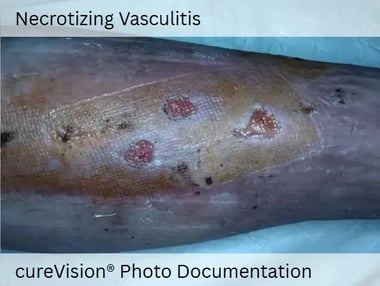
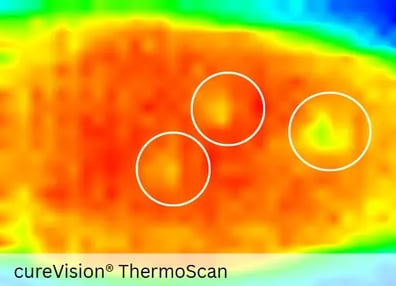
The cureVision photo documentation shows three visually quite similar wounds. Only the cureVision ThermoScan makes the decisive temperature differences visible: one of the wounds is significantly cooler than the other two - a clear indication of ischemia, which can lead to necrosis.1
Temperature gradients as markers for wound healing
As healing progresses, the temperature of the wound adapts to the surrounding area - persistent
hotspots indicate chronic inflammation or infection.1
Detect the development of pressure ulcers at an early stage
Temperature drops in risk areas predict the development of pressure ulcers more accurately than conventional scales.
Even a localized hypothermic spot on intact skin can indicate impending deep tissue damage.1
Recognize abnormal thermal structures
Abnormal thermal patterns or strong asymmetry can indicate clinically relevant changes.
clinically relevant changes. Positive gradient (wound warmer than surrounding area) indicates inflammation, negative gradient
(wound colder) indicates ischemia or necrosis.1
How do I carry out Infrared Thermography?
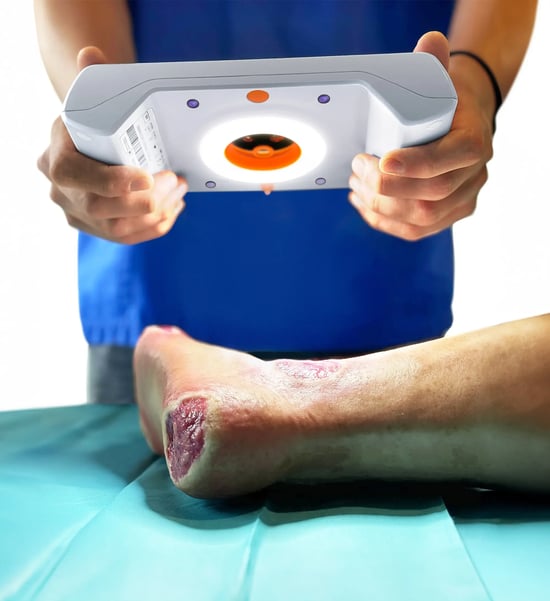
The nurse uses the cureVision Photo Documentation to take a picture of the wound. Within a few seconds, the system creates a thermal image, which can then be compared with the Photo Documentation.
How can the cureVision ThermoScan be used to monitor the progress of wound healing?
As healing progresses, the wound temperature increasingly adapts to the environment. Regular wound documentation allows the temperature curve to be recorded and healing progress to be tracked.1
What thermal abnormalities does the ThermoScan reveal?
The ThermoScan makes thermal abnormalities in the wound visible. This allows early detection of signs of pressure ulcers, inflammation, ischemia or necrosis.
A positive gradient (wound warmer than the surrounding area) indicates inflammation. In contrast, a negative gradient (wound colder than surrounding area) indicates ischemia or necrosis.1
Is special training necessary?
No special training is required to use the ThermoScan.
The thermal image is taken at the touch of a button, although the interpretation of the thermal image naturally requires specialist knowledge.
We would be happy to show you how to use it in a personal appointment.